



Making the Business Case for AI in Radiology: Inside the Harrison.ai Value Calculator
When radiology leaders consider AI, the clinical benefits are often clear long before the financial ones. Backlogs, burnout, delayed diagnoses and rising outsourcing costs all point toward the need for better workflows – yet boards and CFOs want more than intuition. They want numbers. They want a defensible return on investment.
That’s exactly why we sat down with Dr. Mark Phillips, Chief Clinical Officer, and Caitlin Thompson, Regional Director for ANZ, at Launch Day 2025 to unveil the Harrison.ai Value Calculator – our new tool designed to translate clinical outcomes into economic impact. The conversation below dives into how it works in practice and why it’s already becoming a cornerstone of our partnerships with healthcare providers.
Demo the Value Calculator.
When the Clinical Case Isn’t Enough
A few months ago, a large radiology group processing 150,000 chest X-rays and 35,000 CT brain studies annually, came to Harrison.ai with a familiar challenge. As Caitlin explained:
“Their backlogs were rising and their outsourcing costs were climbing, and their clinical team was convinced that AI could help them solve both issues. The problem was they didn’t know how to justify the technology investment to their board.”
“This is a common story in healthcare, even when the clinical case is strong,” Caitlin added. “Clinical teams understand the value, but CFOs, boards, payers, they need numbers. They need a value analysis, and they need a defensible business case.”
That’s where the Harrison.ai Value Calculator comes in.
Built on Real Deployments and Real Outcomes
To tackle this challenge, the team brought forward a capability shaped by years of real-world deployments and measured outcomes. Mark introduced it clearly, “The Harrison.ai Value Calculator. This tool is built from years of partnering with healthcare organisations that actually measure health impact. Real deployments, real data, real results.”
The process begins by grounding the model entirely in the organisation’s own operational metrics – an approach that avoids assumptions and keeps the analysis anchored in reality. As Mark explained, “First, we collect data from you – key metrics that drive your operations: annual scan volumes by modality, current outsourcing numbers, average reporting times, your patient demographics, and reimbursement rates.”
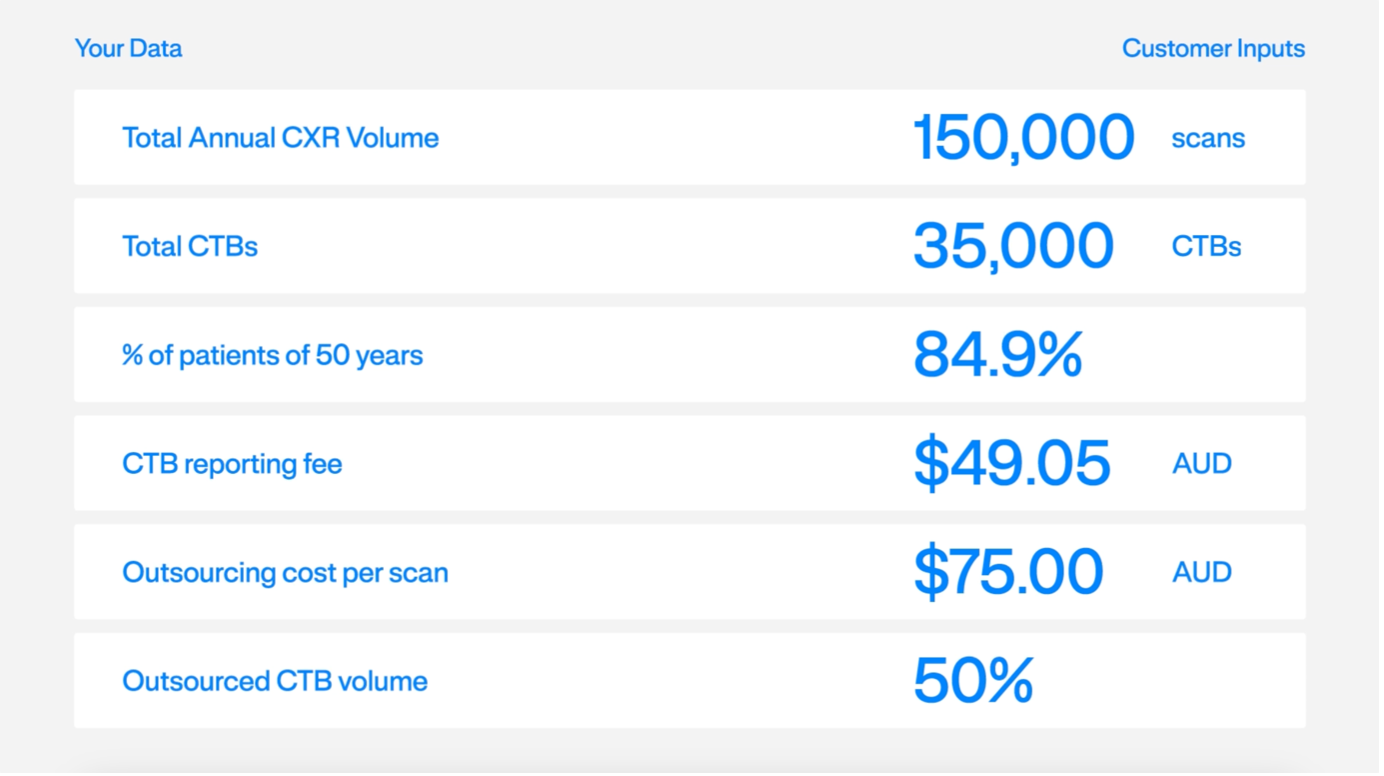
For this radiology group, those numbers surfaced the underlying strain almost immediately; they were outsourcing 50% of their CT brain volume and had a significant backlog problem.
With this operational picture established, the calculator then incorporates real-world evidence from comparable deployments. As Mark explained, “We combine this with industry benchmarks and demonstrable results that we’ve seen in similar organisations who’ve deployed Harrison.ai.”
Together, these layers create a coherent, organisation-specific model, grounded in evidence and built to clearly demonstrate the economic value of AI in driving clinical improvements.
Try the Value Calculator.
The Findings: A Compelling Business Case for Radiology AI
When the numbers were pulled together, the value story became undeniable.
- Reduced Outsourcing
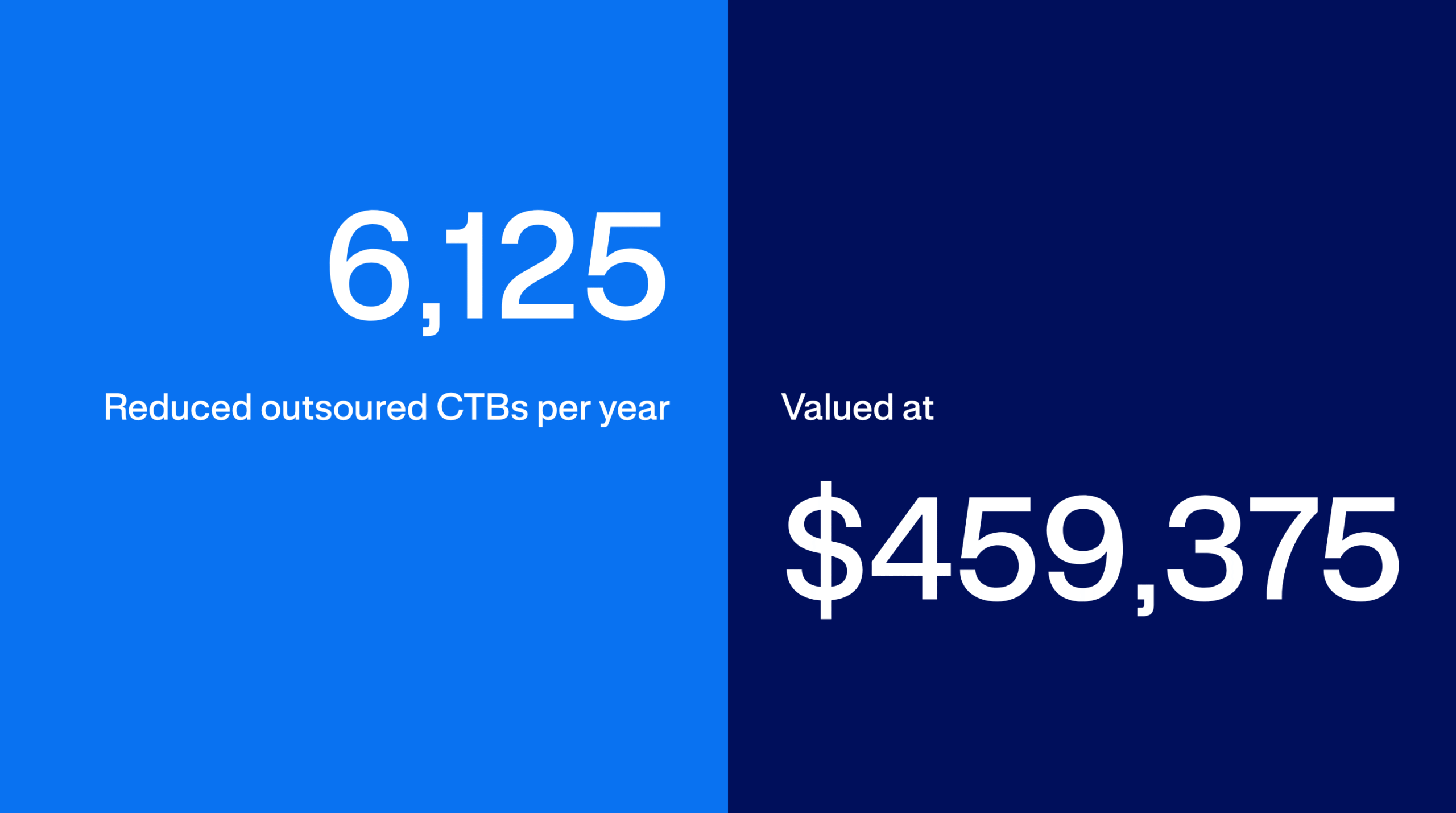
- This healthcare provider was able to bring up to 35% of outsourced brain CT studies back in-house, as Harrison.ai had already identified these as non-urgent.
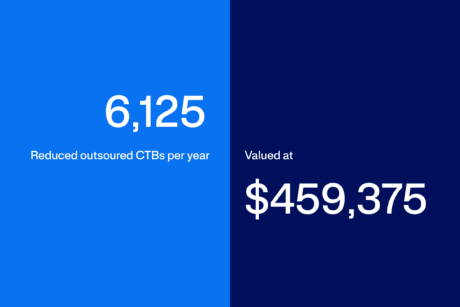
- $460,000 of annual savings from reduced outsourcing costs alone.
- Faster Reporting and Backlog Reduction
With AI-assisted prioritisation and comprehensive detection, the average report turnaround time was significantly reduced. Urgent cases were flagged immediately, meaning that radiologists could tackle work lists in priority order instead of chronologically.
“So this really is about workflow transformation. It’s not just making radiologists faster, but it’s making them more effective, focusing their clinical expertise where it really matters the most,” Caitlin added.
- Sustainability Wins
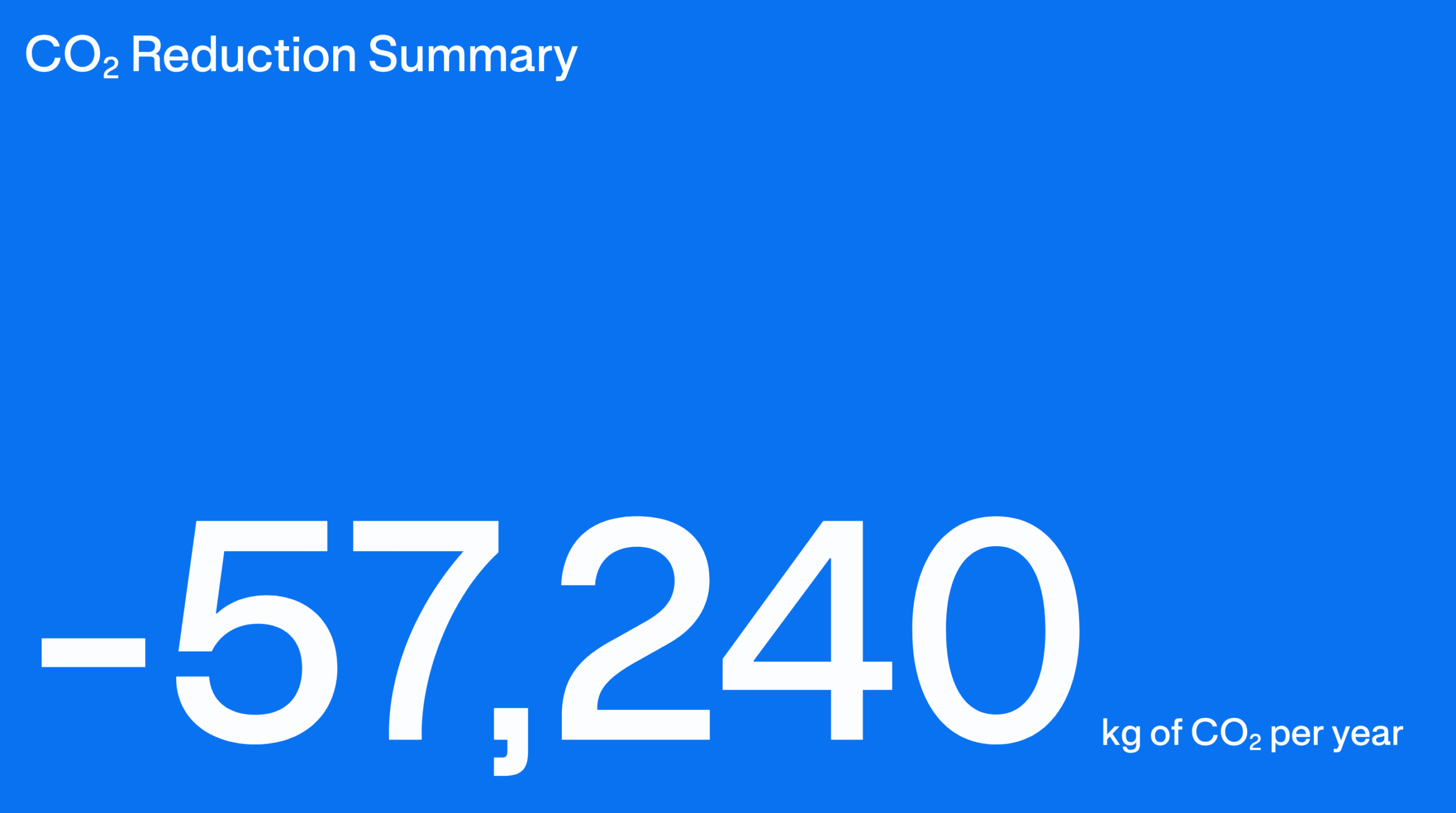
An unexpected value stream emerged when unnecessary follow-up imaging was reduced: “They reduced their carbon footprint significantly, the equivalent of over 300,000 kilometres driven,” Caitlin explained.
For health systems with emission reduction targets, this has become a powerful additional lever.
A Business Case That Secured Board Approval
Armed with quantifiable clinical, operational, financial and sustainability benefits, Mark shared how this became the business case that the client took to their board. “Fast forward to today, we’re now rolling out multiple Harrison.ai products with this client: chest X-ray, CT brain and CT chest.”
Just as importantly, Mark explains how the real-world impact is continuously measured against the original model, “We’re tracking real value against those same KPIs, measuring the actual impact and showing the value that we projected.”
Templates Built for Every Scale
Harrison.ai makes value modelling repeatable and transparent across health systems with templated calculators for chest X-ray, CT brain and CT chest, built using real world data from healthcare organisations. Whether supporting a single hospital or a large enterprise network, Mark highlighted how the tool, “makes the budget approval straightforward and repeatable across multiple sites… that adapts to your scale and your economics.”
And Caitlin highlighted our open invitation, “if you’re exploring a new AI project or if you’re wrestling with how to frame the economics, come and talk to us, bring your numbers, and we’ll bring our value calculator and years of industry experience.” By working together, “we’ll build a clear and defensible value story, one that shows how the business of AI can deliver real measurable value for your organisation.” Because when value is delivered and measured, patients benefit. And that’s why we’re all here.
Try the Value Calculator.
Bring your numbers to us and together, we’ll build a customised business case.