

Harrison.ai Draft Report Generation: Driving Innovation in Radiology AI
Radiologists everywhere want the same thing: more time. As Chief Medical & AI Officer at Harrison.ai, Dr. Jarrel Seah, put it at Launch Day 2025, “Ask any radiologist what they wish for, and somewhere on that list you’ll hear more time… not time spent typing or dictating the same phrases for the hundredth chest X-ray that week.”
That’s why, at Launch Day 2025, we revealed Harrison.ai Draft Report Generation. A new capability powered by our enterprise chest X-ray model and our radiology-specific foundation model Harrison.rad.1. While the industry talks about when this future will arrive, Jarrel made it clear: “We are here to tell you it’s already here.”
Watch below as Dr. Jarrel Seah and Dr. Sajith Karunasena reveal how AI-powered draft reporting works.
Disclaimer: This video is intended exclusively for healthcare professionals. The products shown in the video are not available for purchase by the general public and are intended for professional use only.
All information is subject to terms and conditions, regulatory requirements, regional clearance and availability, technical specifications, and deployment conditions. Subject to change without notice.
Explore Draft Report Generation.
Built on Clinical Excellence
Draft report generation isn’t magic, Jarrel emphasised. “It simply requires two things done exceptionally well. First, comprehensive detection. Our chest X-ray model identifies 124 findings with accuracy, leveraging over a million images trusted by radiologists in over one thousand sites globally.”
The second requirement is clinical understanding, delivered by Harrison.rad.1, a radiology-specific foundation model. Jarrel highlighted its validation in a rigorous independent healthcare AI challenge, noting that:
“113 board-certified radiologists evaluated over 2,800 reports. And they couldn’t reliably distinguish between AI-generated and human-written reports.”
These combined technologies power Harrison.ai’s Draft Report Generation solution. The solution complies with Australian clinical and regulatory standards and is already being piloted at early adopter sites.
Radiologists are leveraging the solution as an intelligent AI assistant to draft preliminary reports. The report is subsequently reviewed by the clinician, who can make small edits or additions if required, before signing-off the report.
AI Assisted Report Generation in Action
Dr. Sajith Karunasena, Clinical AI Consultant at Harrison.ai, took the stage:
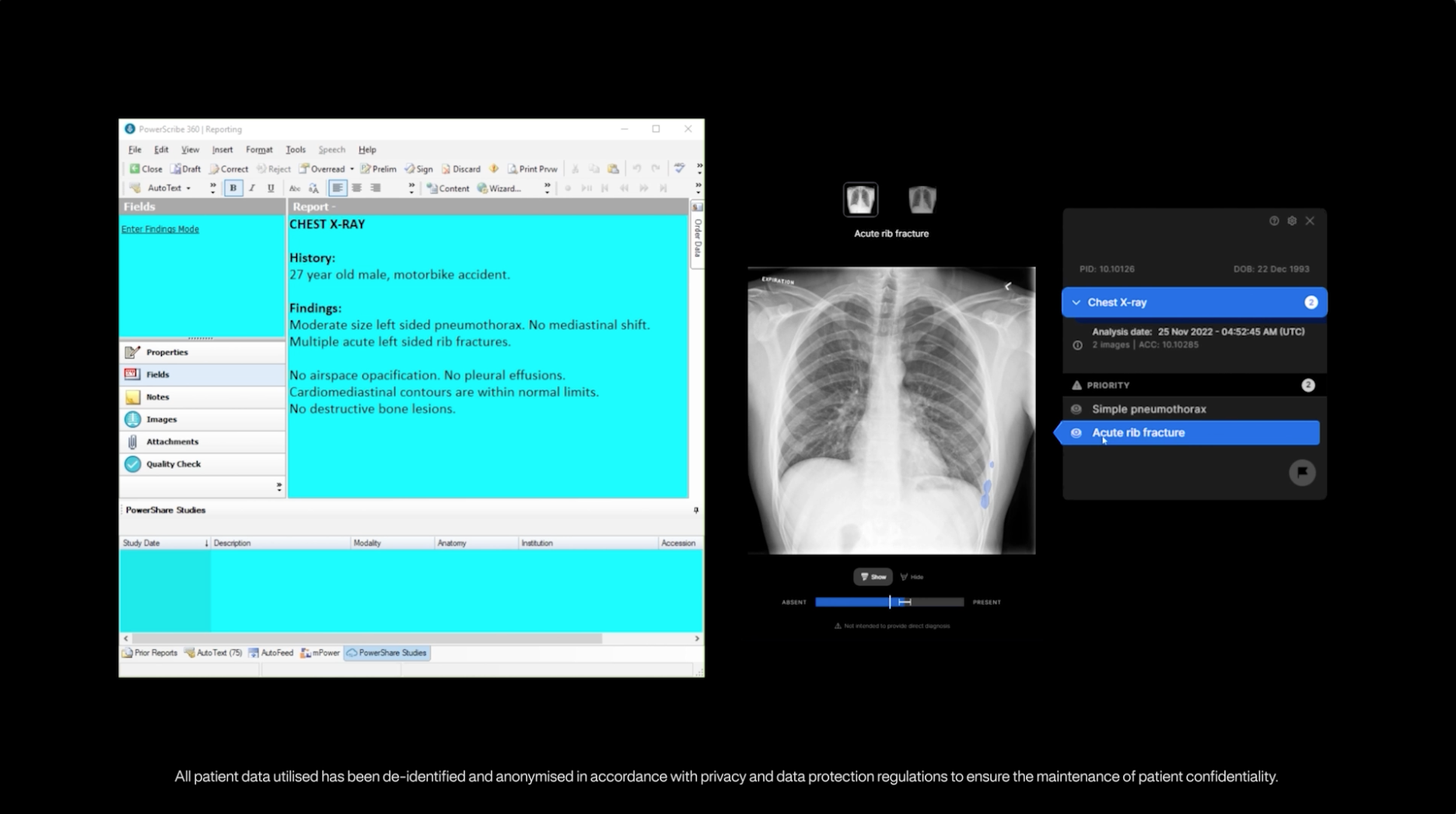
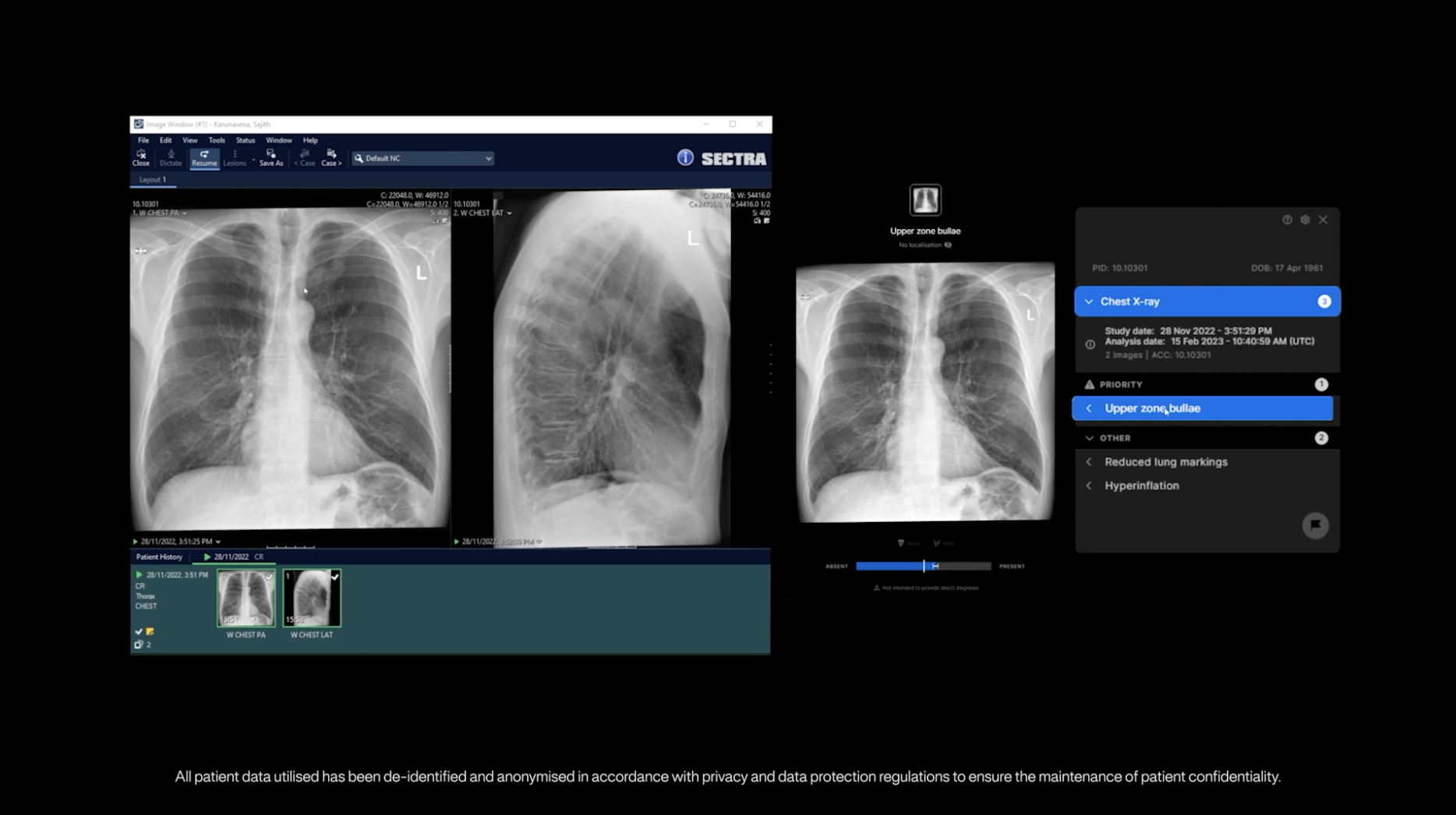
“I’m demonstrating our products today integrated with Sectra PACS and Nuance reporting software, a workflow many radiologists use every day. Our AI triage system flags cases requiring urgent attention, so radiologists can prioritise the patients who need them most.”
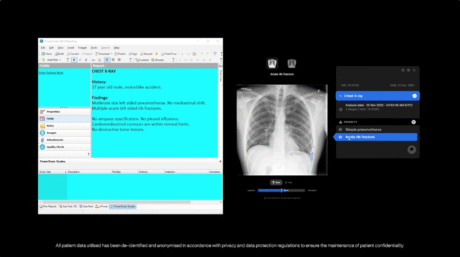
In the demo, Sajith showed a routine outpatient chest X-ray with findings suggestive of emphysema. The diagnostic assistant pre-populates the report, summarising positive findings upfront and permanent negative findings afterward. “If I wanted to add a recommendation to the referrer to correlate with lung function tests at the end, it would be a simple one-line dictation. Then I can hit sign to send the report to the referrer,” Sajith explains.
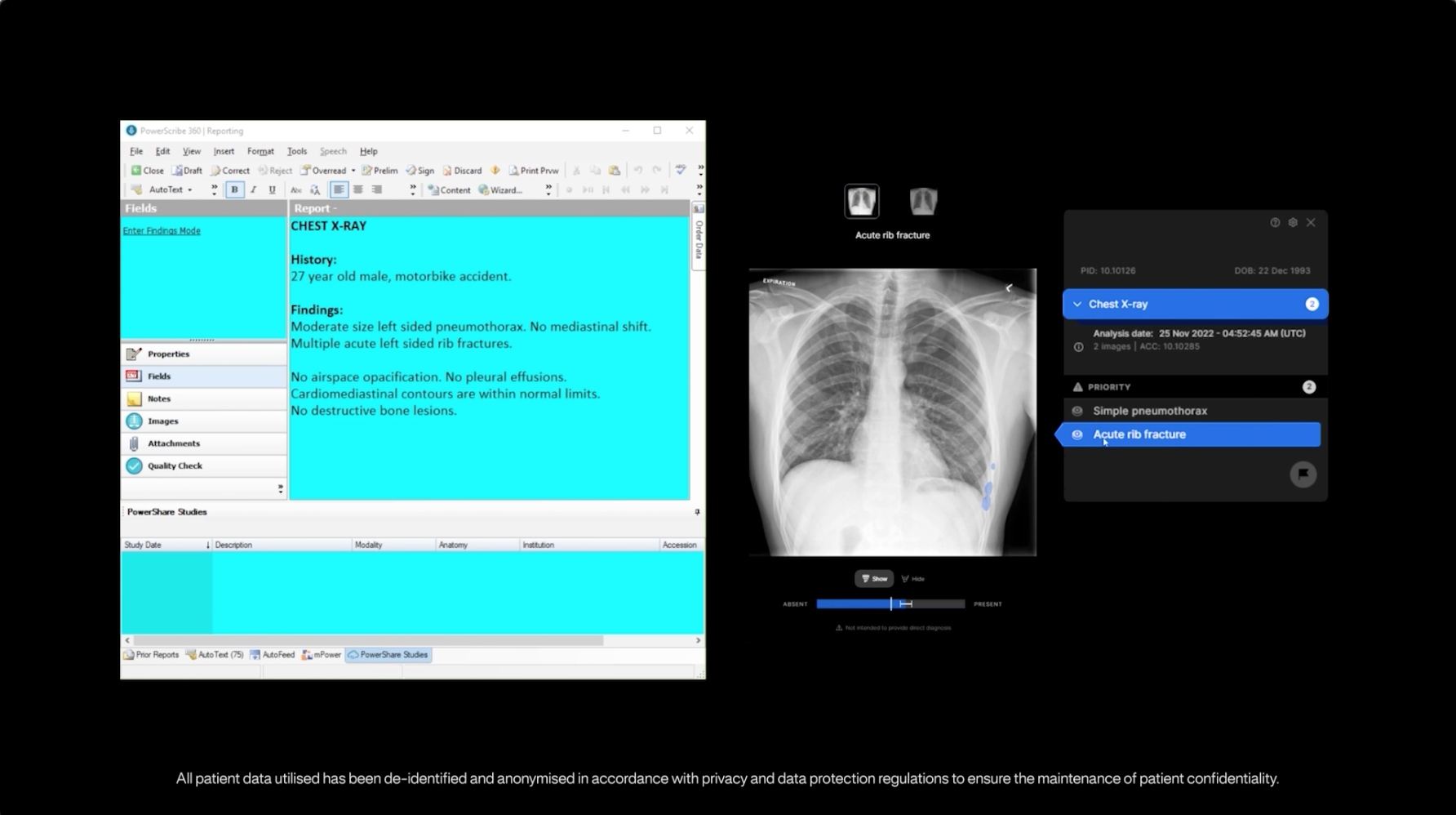
For urgent cases, the reporting tool prioritises critical findings, such as pneumothorax, as Sajith explained: “Notice that the pneumothorax, the most important finding has been described first, just as a radiologist would, and the important associated negative statement that there is no mediastinal shift to indicate tension is also included. The rib fractures, also an acute finding related to trauma, are also detailed in this initial section of the report. The standard normal statements to complete the report are then presented in a logical order afterwards.”
“With this technology, instead of spending a significant amount of time dictating all the text you see here, a radiologist can simply review the draft AI report and make small changes or additions if necessary in their native reporting workflow,” Sajith added.
Giving Radiologists Their Time Back
Both Dr. Jarrel Seah and Dr. Sajith Karunasena underlined the significance of the tool.
“When you consider the sheer number of X-rays radiologists report every day, this sort of technology can save them a tremendous amount of time and ultimately allows radiologists to focus their efforts on clinical interpretation rather than documentation.” Sajith shared.
“The future that everyone is promising, we are already deploying it,” said Jarrel. “Harrison.ai Chest X-ray Draft Report Generation. Built on proven technology, integrated into your workflow, meeting regulatory standards in clinical use.”
Want to experience Harrison.ai Draft Report Generation firsthand? Visit us at booth 5521 at RSNA 2025 or book a meeting with our team to explore how we can help you save time and focus on what matters most.
Experience Draft Report Generation.